
Acoustic screens, partitions and room dividers
Acoustic screens interrupt the direct sound path between neighbouring workstations, especially speech, and usually absorb on both faces. Height is decisive: the screen has to break the line of sight between seated people, otherwise the effect stays small. Screens damp direct transmission but do not replace ceiling or wall absorption.
A screen works through two mechanisms: it shields the direct sound path between desks and absorbs the incident sound at its surface instead of reflecting it. Both only work if the screen stands high enough and the surrounding room is already damped. In a reverberant room the reflections via ceiling and walls simply travel around the screen.
Last updated: 28 June 2026
- products
- 147
- datasets total
- 1,896
- absorption coefficient
- αw up to 1.0
- per variant
- measurement data
Partition screens with measurement data
Freestanding acoustic partitions and room dividers, sorted by absorption coefficient.
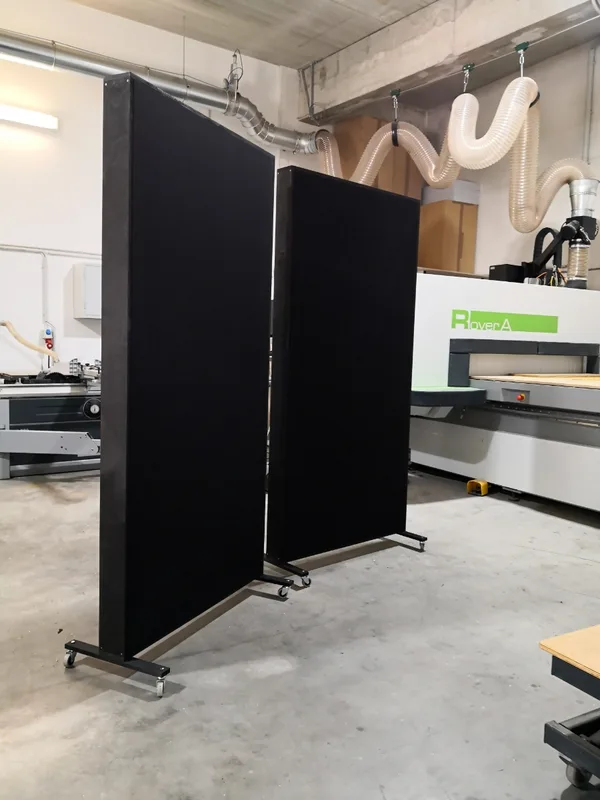 αw 1.00
MW Acoustics
Akustik-Stellwand Premium
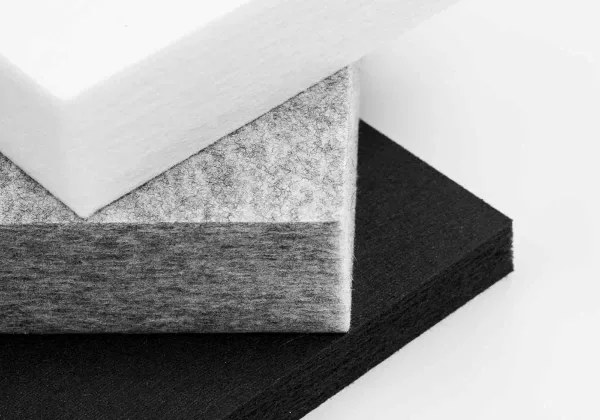 αw 1.00
BK Raumakustik
aPerf® pad
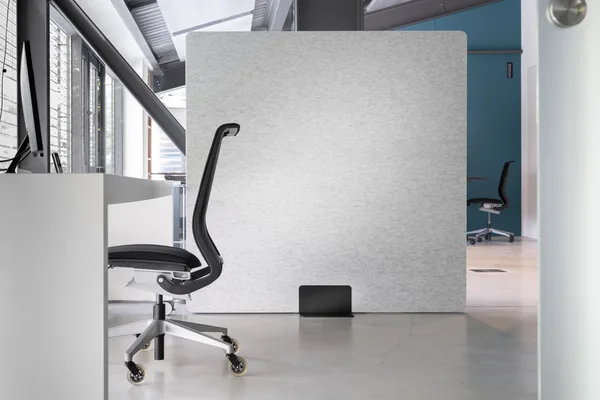 αw 1.00
SCHALLSAUGER (KASPER GmbH)
Schallsauger FRAMELESS MOVE
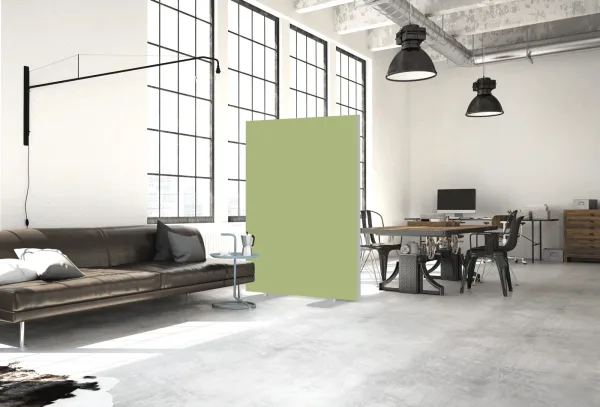 αw 0.95
freiraum Akustik
Acoustic Room Divider
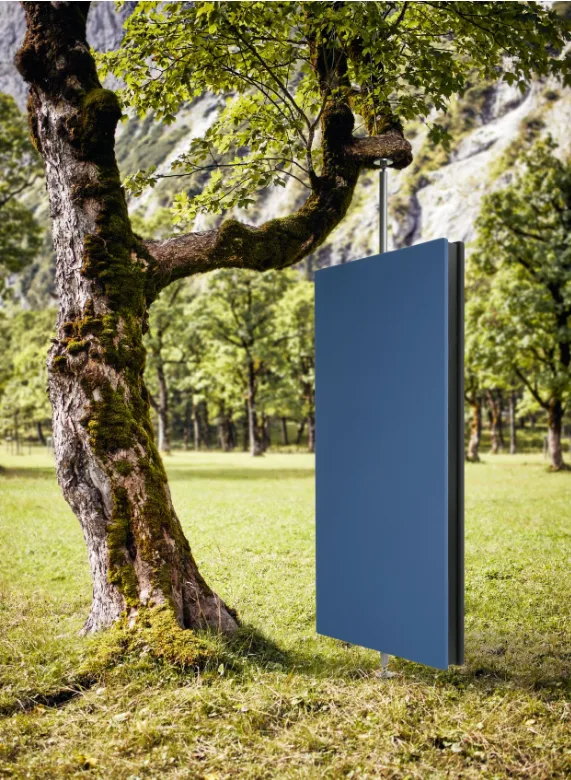 αw 0.95
B11
B11 Rotary Wall
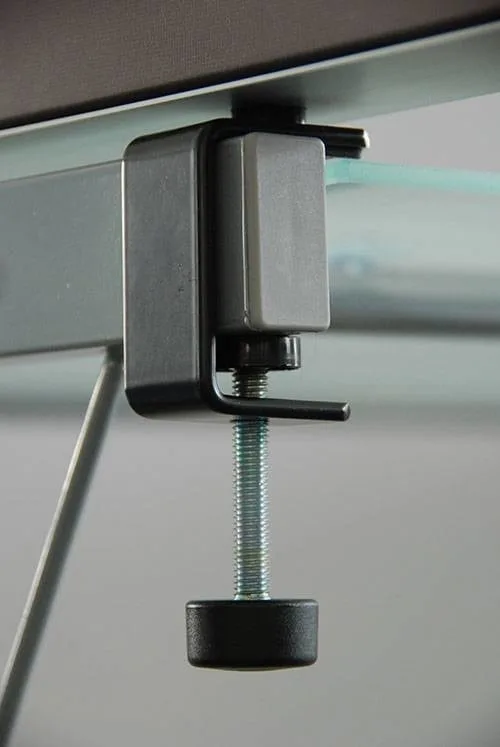 αw 0.95
freiraum Akustik
Desk Partitions
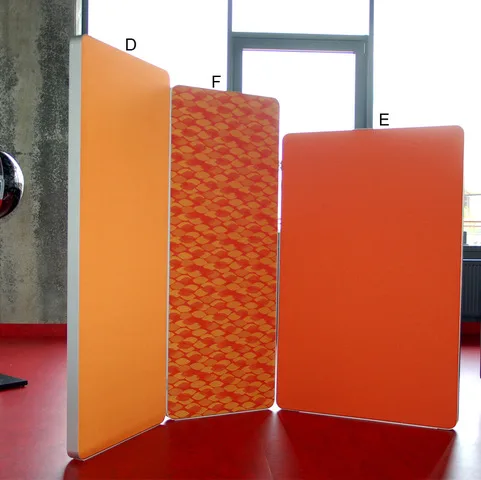 αw 0.90
raumAKUSTIKS
raumAKUSTIKS Acoustic Partition Screen
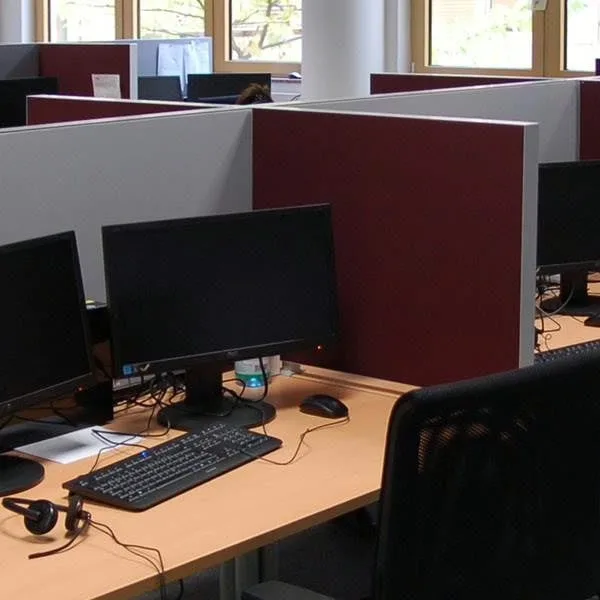 αw 0.90
raumAKUSTIKS
raumAKUSTIKS Desk Absorber
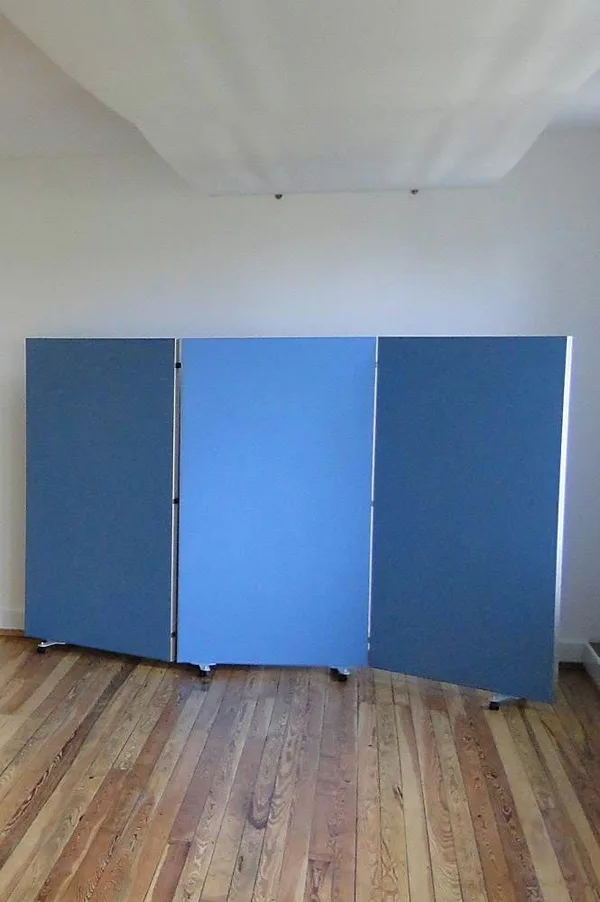 αw 0.90
raumAKUSTIKS
raumAKUSTIKS Partition Wall
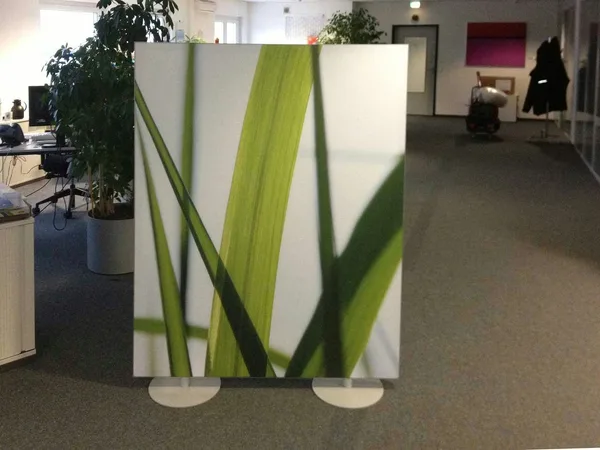 αw 0.90
raumAKUSTIKS
raumAKUSTIKS Partition Wall
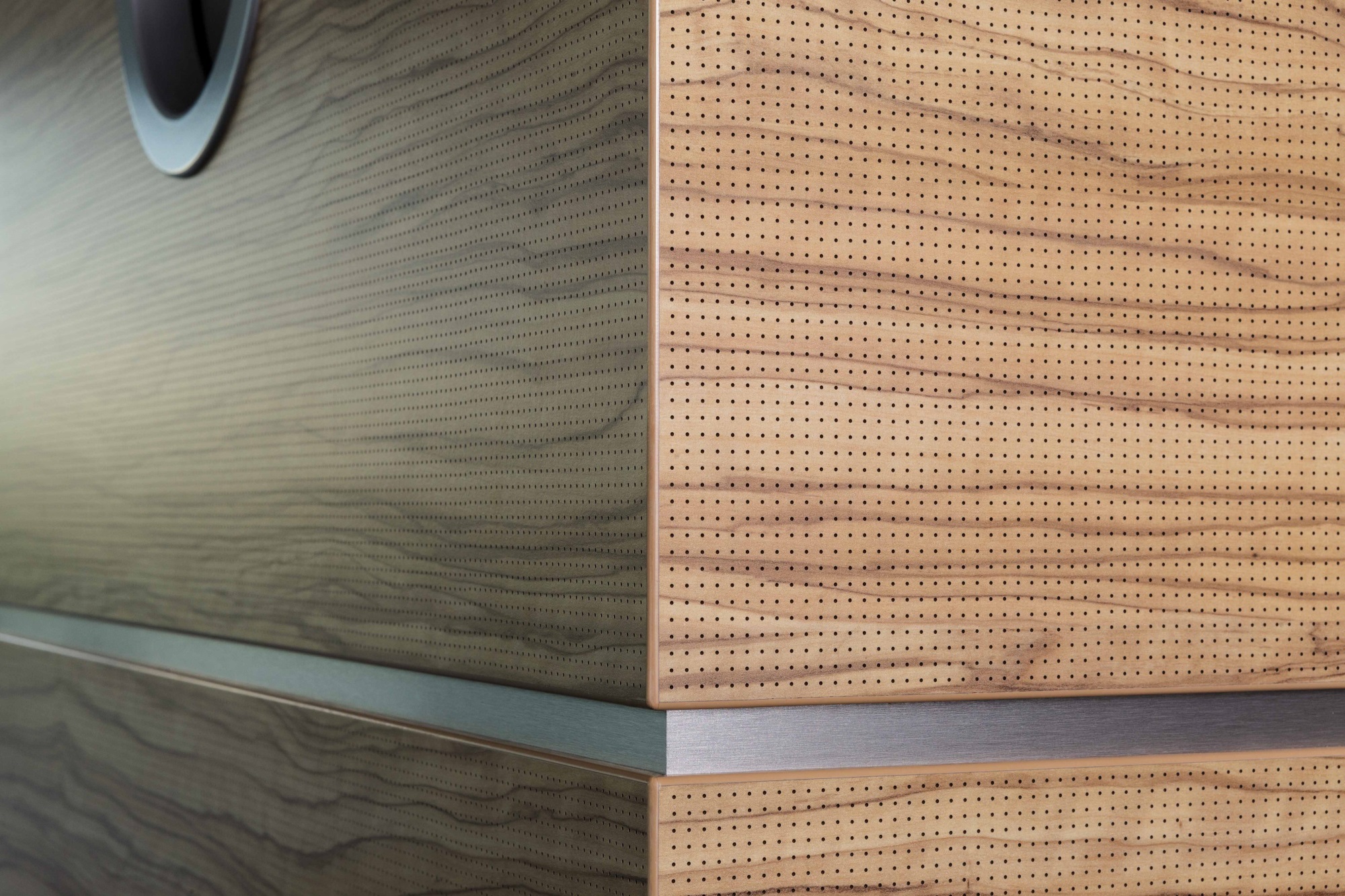 αw 0.70
BVS Akustik
AKUSTItrenn Acoustic Partition
 αw 1.00
GIK Acoustics
244 Bass Trap
Screen types compared
| Effect | Typical αw | Height | Best for | |
|---|---|---|---|---|
| Floor screen (freestanding) | Interrupts direct speech transfer and shields whole zones | 0.7–1.0 (both sides) | From approx. 1.5 m, for the seated line of sight | Open space, zoning, room division |
| Desk-mounted screen | Damps speech right at the workstation, short sound path | 0.5–0.9 (both sides) | Approx. 0.4–0.6 m above the desk edge | Bench desks, double and row desking |
| Mobile partition (rolling) | Flexible shielding, repositioned at short notice | 0.6–1.0 (both sides) | Usually 1.6–2.0 m with castors | Changing layouts, temporary meeting zones |
How high does an acoustic screen need to be?
What matters is the line of sight between the heads of seated people. A screen only shields direct sound effectively once it breaks that line. For two people sitting opposite each other, about 1.5 m of total height is often enough; for standing passers-by or real zone separation, considerably more. A desk-mounted screen needs roughly 0.4 to 0.6 m above the desk edge for this.
Placement matters just as much: the screen belongs as close to the sound source as possible, that is directly between the two workstations, not in the middle of the room. The shorter the unshielded sound path, the stronger the effect.
A screen does not replace ceiling or wall absorption
A screen reduces the direct sound path, not the sound reflected via ceiling and walls. In a reverberant room these reflections travel over the screen, and the level gain at the neighbouring desk stays small. That is why screens work best as a complement to a damped ceiling, not as a substitute.
In practice: treat the ceiling and large wall areas with broadband absorbers first, then use screens to shield the direct speech transfer between workstations. A reliable design is derived from the reverberation time in the room.
What to look for in the measurement data
The decisive figure is the weighted sound absorption coefficient αw, ideally backed by a reverberation-chamber measurement. Screens often absorb on both faces, and the αw refers to the absorber surface. A high αw helps little, though, if the screen is too low or badly placed, because the shielding of the direct path is then missing.
Fire safety is relevant depending on the building and mandatory in escape routes. The fire class (from non-combustible to easily flammable) is filterable.
Frequently asked questions
Do acoustic screens really reduce office noise?
Yes, but only the direct sound path. A screen that absorbs on both faces shields the speech transfer between neighbouring workstations and reduces distraction. It does not replace ceiling absorption, though: in a reverberant room reflections travel over the screen. The most effective approach is a damped ceiling combined with well-placed screens.
How high must a screen be and where do I place it?
The screen must break the line of sight between the heads of seated people, often from about 1.5 m of total height for people sitting opposite each other. A desk-mounted screen needs roughly 0.4 to 0.6 m above the desk edge. Place the screen as close to the sound source as possible, directly between the workstations, not in the middle of the room.
Do screens absorb on both sides?
Acoustic screens are usually built to absorb on both faces, so they soak up sound from both neighbouring desks instead of reflecting it. The stated αw refers to the absorber surface. Pure visual dividers or screens faced only on one side perform worse, so it pays to check the construction and the measured value.
Do screens replace ceiling absorbers?
No. Screens damp the direct sound path between desks, not the sound reflected via ceiling and walls. Without a damped ceiling the room stays reverberant and the gain at the neighbouring desk is small. Treat the ceiling and large wall areas with broadband absorbers first, then use screens to shield speech transfer specifically.
Are there mobile or desk-mounted options?
Yes. Freestanding floor screens separate whole zones, mobile versions on castors can be repositioned at short notice, and desk-mounted screens damp speech right at the workstation. Choose the type by use: fixed zoning, flexible layout or bench desk. In the search you can filter for freestanding partitions and compare them by αw.
Which fire class should a partition have?
It depends on the building. In ordinary offices fire safety is rarely mandatory, but it is required in escape routes and certain public buildings. The decisive figure is the fire class (from non-combustible to easily flammable). You can filter by minimum fire class in the search.
Find matching screens
Compare all freestanding partitions and room dividers with measurement data and filter by αw, material and fire class.
Screens in search