
Ceiling absorbers: panels for the ceiling
The ceiling is usually the largest uninterrupted free surface in a room, so it delivers the most absorption per square metre. A closed acoustic ceiling lowers the overall level throughout the room, while suspended systems also improve low-frequency absorption through the air gap. Good systems reach αw 0.9 to 1.0.
If you want to calm a reverberant room, the ceiling is the place to start. It runs parallel to the floor, is rarely interrupted by windows or furniture, and therefore offers the best ratio of effort to acoustic effect. Only once the ceiling is fully used do wall absorbers against specific reflections pay off.
Last updated: 28 June 2026
- matching products
- 147
- datasets total
- 1,896
- absorption coefficient
- αw up to 1.0
- measurement method
- Reverberation chamber
Ceiling absorbers with measurement data
Ceiling-mounted products (closed ceilings, suspended systems, surface panels, rafts), sorted by absorption coefficient.
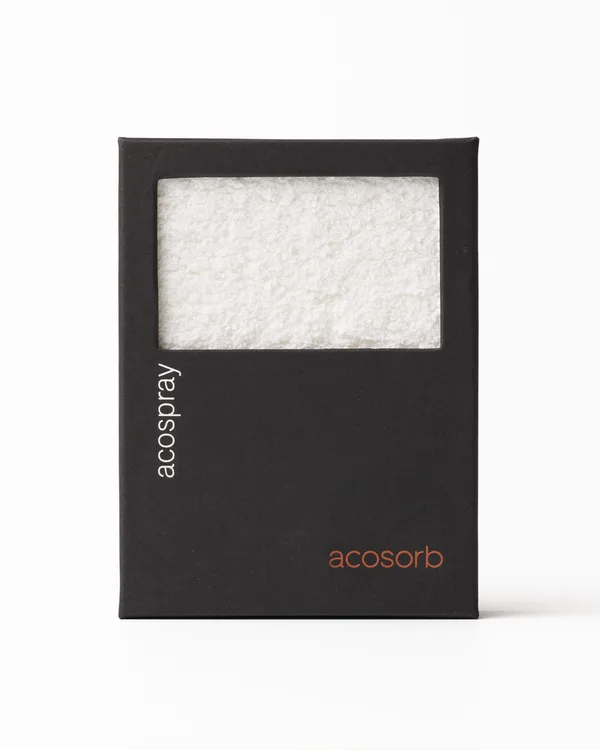 αw 1.00
Acosorb
Acospray DC1
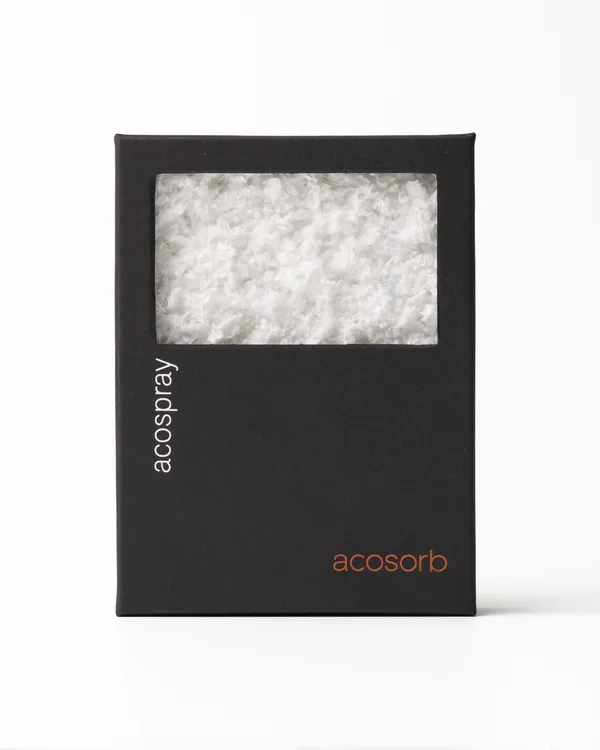 αw 1.00
Acosorb
Acospray DC3
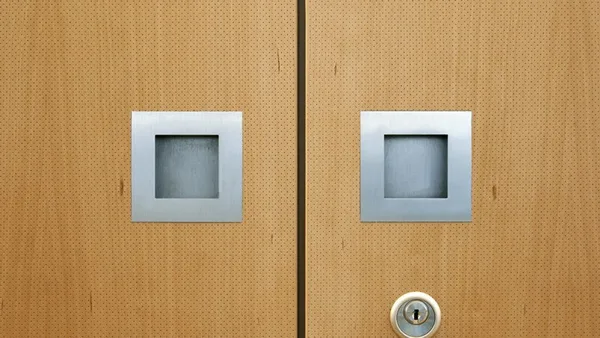 αw 1.00
alpha AKUSTIK
alpha AKUSTIK NANOLITE
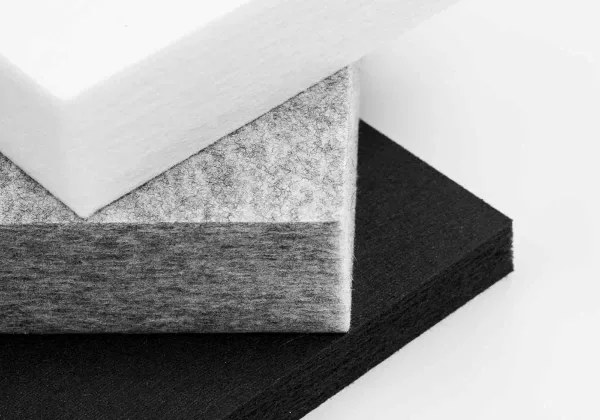 αw 1.00
BK Raumakustik
aPerf® pad
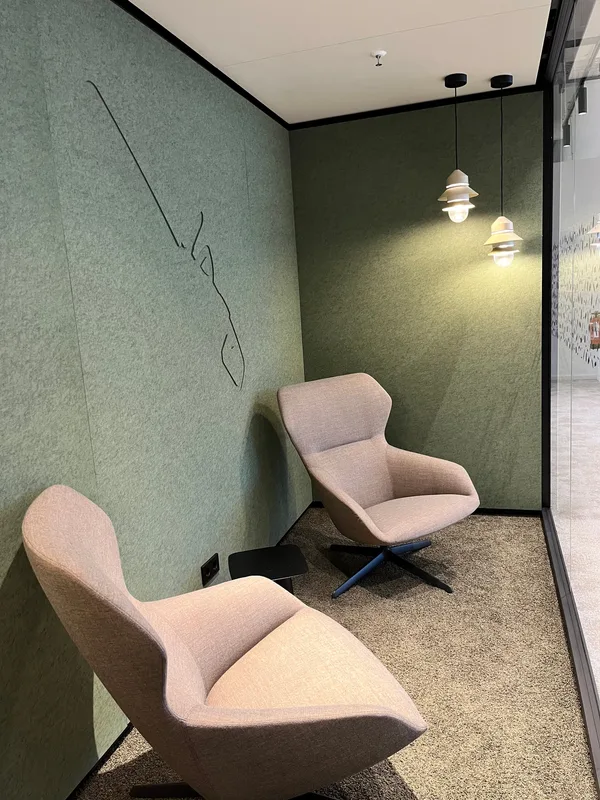 αw 1.00
BK Raumakustik
aPerf® panel
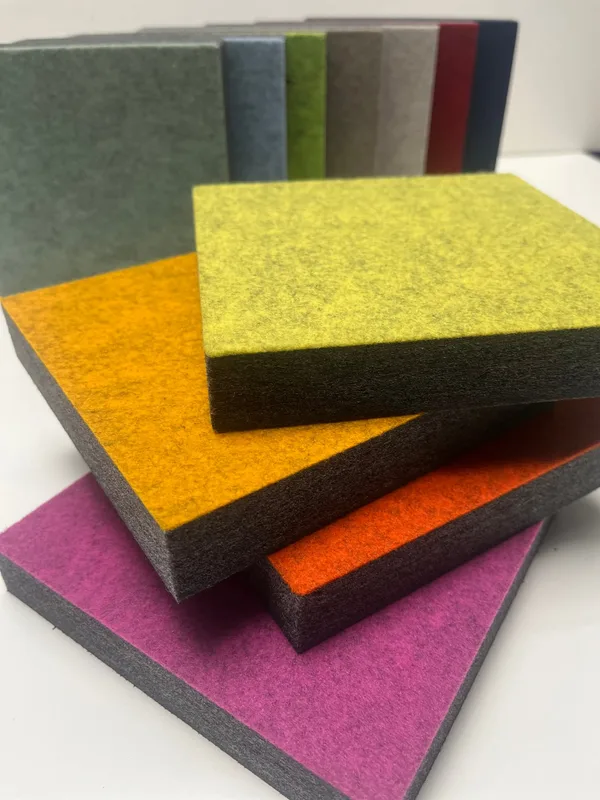 αw 1.00
BK Raumakustik
aPerf® panel colour
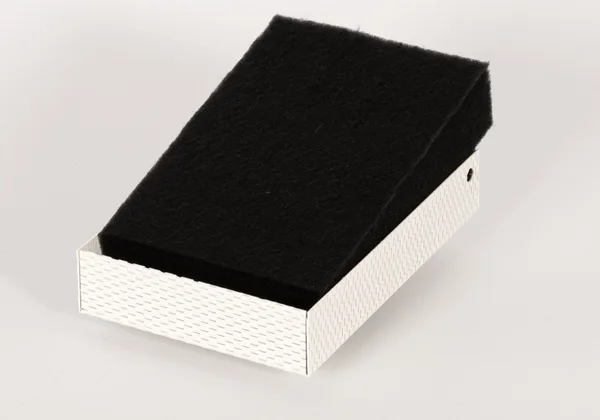 αw 1.00
BK Raumakustik
aPerf® wool
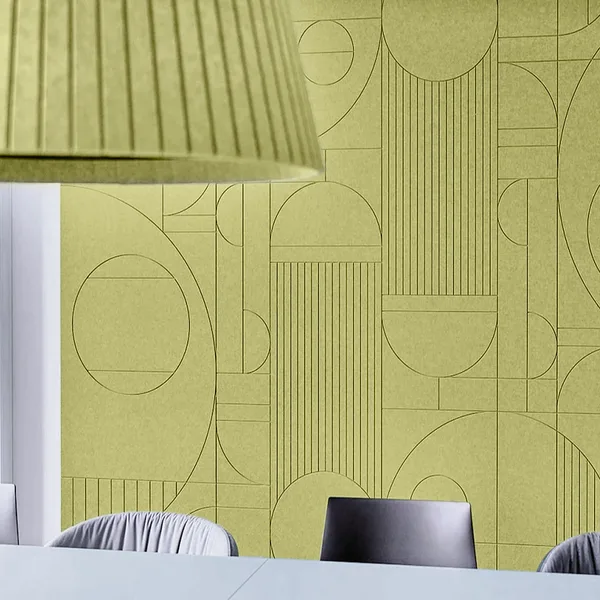 αw 1.00EPD
B11
B11 Archisonic Felt
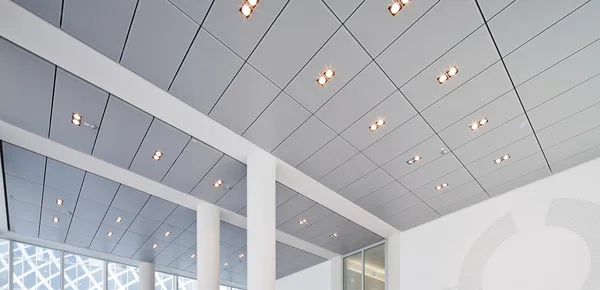 αw 1.00EPD
Fural Systeme in Metall GmbH
FURAL Metal Cassette Ceiling
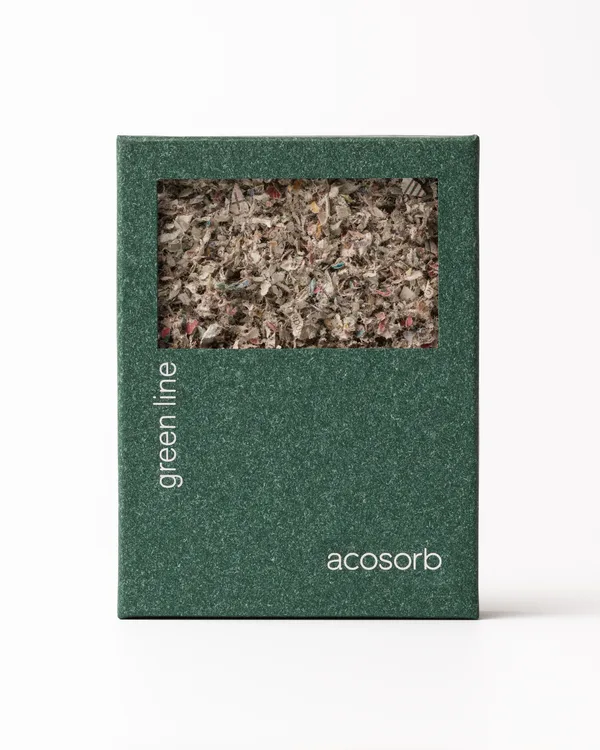 αw 1.00
Acosorb
Green Line
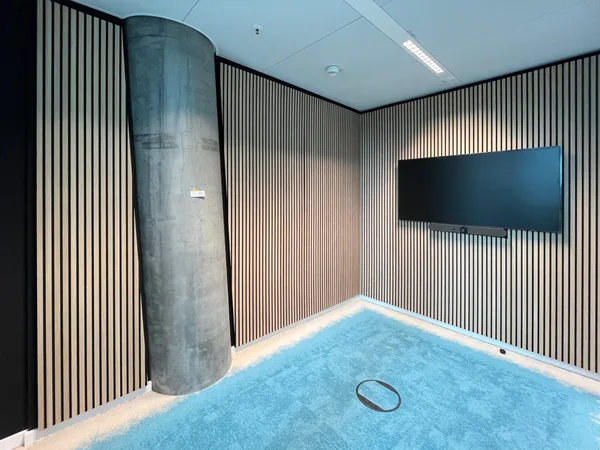 αw 1.00
BK Raumakustik
LinePerf®
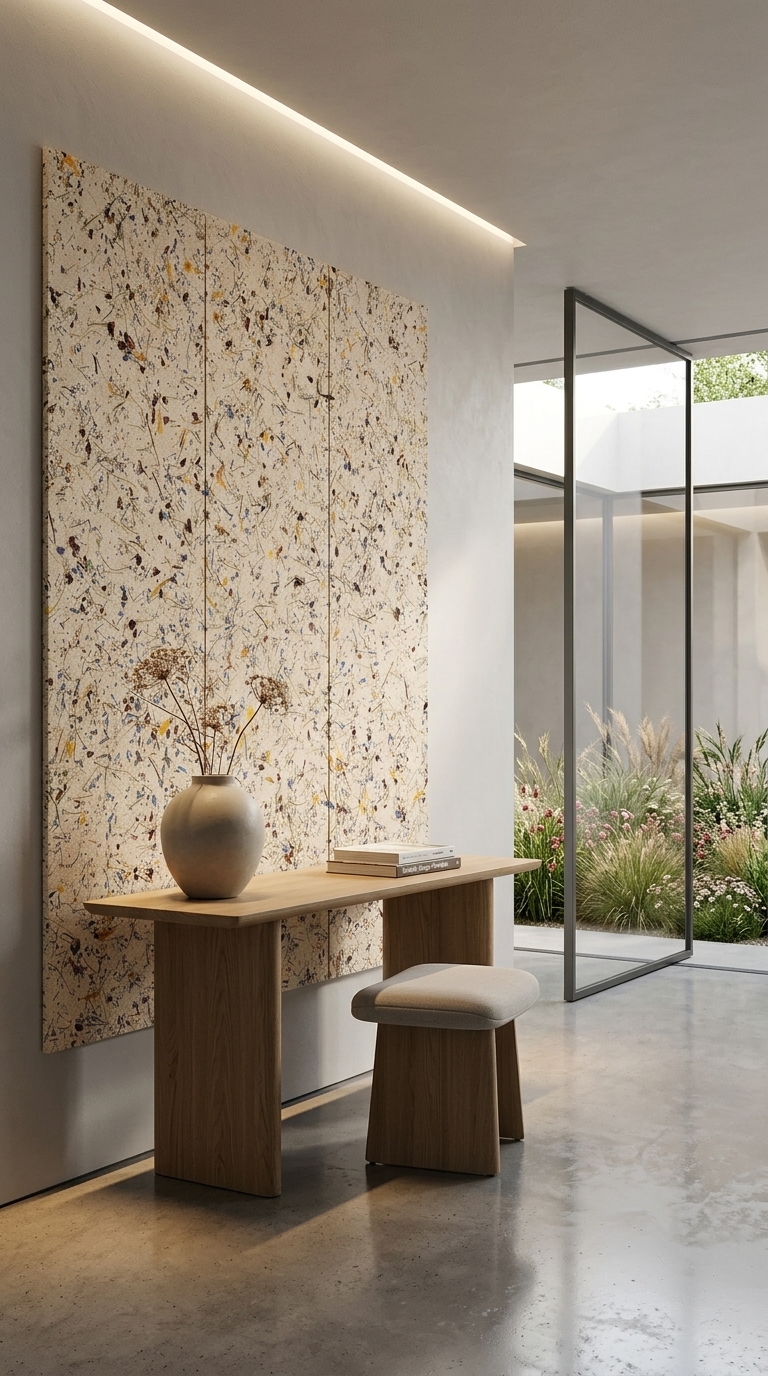 αw 1.00
ORGANOID
ORGANOID Acoustic Panel Modular
Ceiling solutions compared
| Effect | Typical αw | Mounting | Best for | |
|---|---|---|---|---|
| Closed acoustic ceiling | Maximum, even absorption across the full area | 0.9–1.0 | Full-area, surface-mounted or suspended | New build, open-plan offices, high demands |
| Suspended ceiling with cavity | Broadband plus better low-frequency effect from the air gap | 0.9–1.0 | Suspended with a gap to the structural ceiling | Rooms with services, low frequencies |
| Surface-mounted panels (direct) | Partial ceiling coverage, easy retrofit | 0.8–1.0 | Glued or screwed directly to the ceiling | Existing buildings, low rooms, partial refits |
| Rafts / baffles (islands) | Targeted over zones, effective on both sides | 0.8–1.0 (per covered area) | Freely suspended, single or in a grid | Exposed concrete, industrial look, flexible zones |
Why treat the ceiling first?
In most rooms the ceiling is the largest uninterrupted free surface. Floor, walls and windows are taken up by circulation, furniture and glazing, while the ceiling is freely available. Because acoustic effect rises with the effective absorber area, a treated ceiling delivers the most absorption per square metre invested and lowers the sound level evenly throughout the room.
Treating the ceiling first often brings the reverberation time into the target range. Wall absorbers are then added precisely where direct reflections between speaker and listener cause problems.
Full ceiling or partial coverage?
A closed acoustic ceiling covers the full area and delivers the highest, most even absorption. It is the baseline for demanding rooms such as open-plan offices, classrooms or canteens. Partial coverage with surface panels or rafts treats only part of the ceiling but is cheaper, easier to retrofit and suits exposed-concrete or industrial looks.
Rafts and baffles hang freely in the room and work on both sides, top and bottom. As a result they reach high values relative to the area covered, even when only part of the ceiling is treated.
Surface-mounted or suspended?
Panels mounted directly on the structural ceiling save height and are easy to retrofit. A suspended system with an air gap between absorber and ceiling, by contrast, noticeably improves low-frequency absorption, because the cavity acts as an additional resonant volume. The larger the gap, the lower the effective absorption reaches.
The decisive figure is always the weighted sound absorption coefficient αw, derived from a reverberation-chamber measurement. Always check the stated mounting type in the data, because the same absorber with an air gap reaches markedly different low-frequency values than when mounted directly.
Frequently asked questions
Closed acoustic ceiling or ceiling rafts?
A closed acoustic ceiling covers the full area and delivers the highest, most even absorption, ideal for demanding rooms. Rafts and islands cover only partial areas, are cheaper and easier to retrofit, and work on both sides. For exposed concrete or flexible zoning, rafts are often the better choice; for maximum effect, the closed ceiling.
What percentage of the ceiling should I cover?
A closed acoustic ceiling covers almost the full area and is the benchmark. With partial coverage using rafts or panels, around 40 to 70 percent of the ceiling area is often needed to bring the reverberation time into the target range. The exact figure depends on room height, use and the products' αw values.
Does the air gap of a suspended ceiling improve bass?
Yes. The cavity between absorber and structural ceiling shifts the effective absorption to lower frequencies, because the enclosed air volume resonates with it. The larger the gap, the lower the effect reaches. The same absorber therefore reaches better low-frequency values with an air gap than mounted directly. The mounting type is stated with each reverberation-chamber dataset.
Should I combine ceiling and wall absorbers?
Treat the ceiling first, because as the largest free surface it delivers the most per square metre. If that is not enough, or if direct reflections between speaker and listener cause problems, wall absorbers are added precisely. The combination of a damped ceiling and targeted wall areas usually gives the best result per square metre invested in larger rooms.
How does an acoustic ceiling relate to reverberation time?
Reverberation time has target values depending on room use and volume. An acoustic ceiling is usually the most effective measure for reaching these targets. From the αw values and the area covered, the resulting reverberation time can be calculated. The Acoustic Index reverberation calculator uses each product's stored measurement data directly.
What fire class does an acoustic ceiling need?
The decisive figure is the fire class, which ranges from A1 (non-combustible) to F. Escape routes and many public buildings require non-combustible ceilings, often A1 or A2. In ordinary offices and homes the requirements are lower. You can filter by minimum fire class in the search.
Find matching ceiling absorbers
Compare all acoustic ceilings and ceiling absorbers with measurement data and filter by αw, material and fire class.
Ceiling absorbers in search